An internal identity system designed to strengthen culture, collaboration, and visibility within the Technology & Transformation department at the IDB.

🌎 Context
At the time of this project, the Information Technology Department (ITE) at the Inter-American Development Bank was undergoing a cultural and strategic shift. The department—later renamed Technology & Transformation (TTD) after a 2025 reorganization—was moving from a traditional project-based IT model toward product thinking, user-centric solutions, and stronger cross-team collaboration.
⛰️ The CHALLENGE
Before the identity system, the department lacked a cohesive visual language and shared cultural markers. Teams worked in silos, often identifying more strongly with their individual units than with the department as a whole. While adoption of the new principles was high and attitudes were positive, there was no unified way to express them visually or reinforce them consistently.
The challenge was not to invent culture—but to make it visible, shared, and recognizable.
🧭 Brand Direction & Concept
The identity needed to feel innovative, approachable, and attractive in line with IDB's branding guidelines.
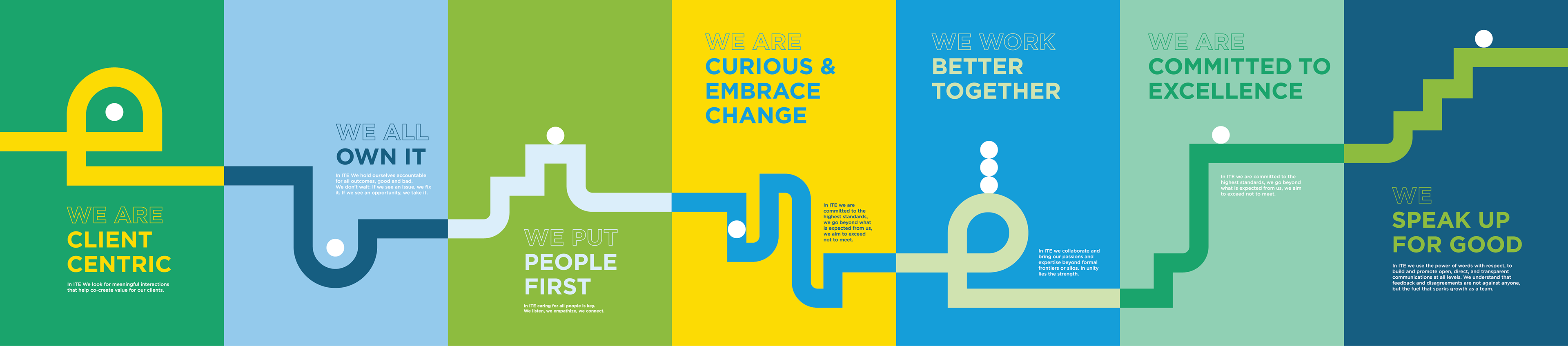
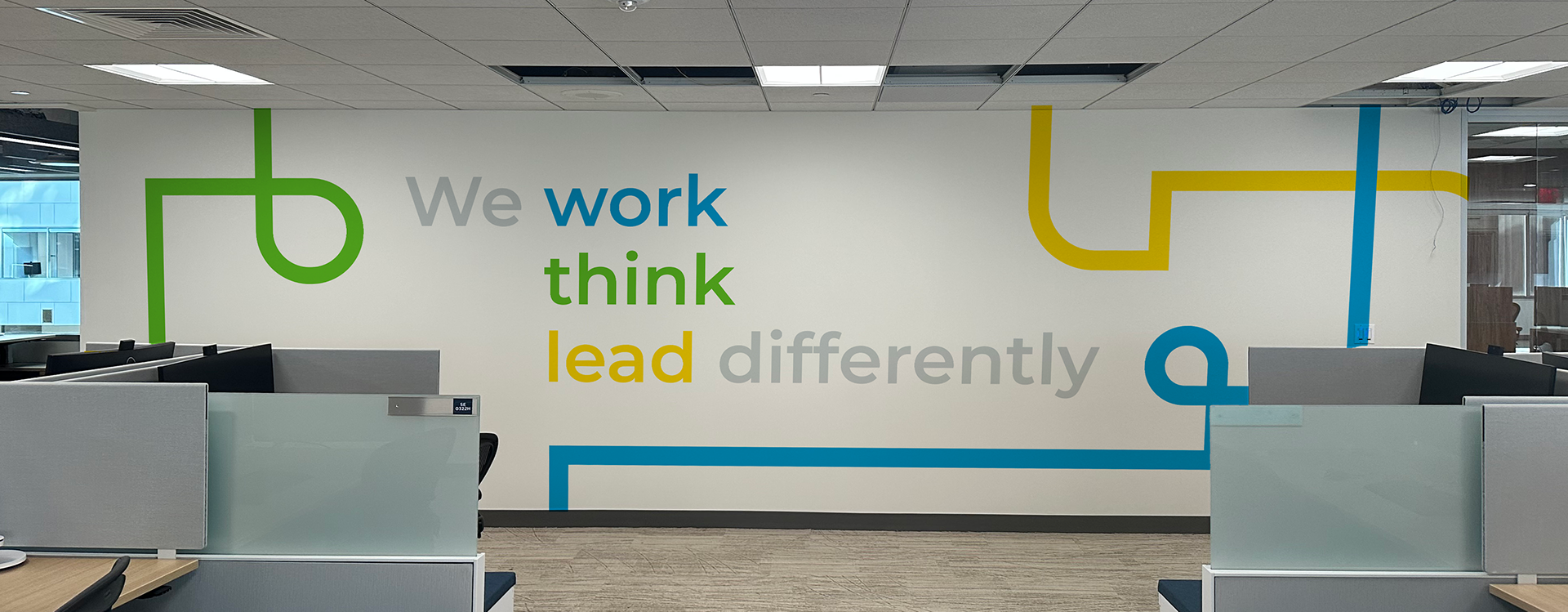
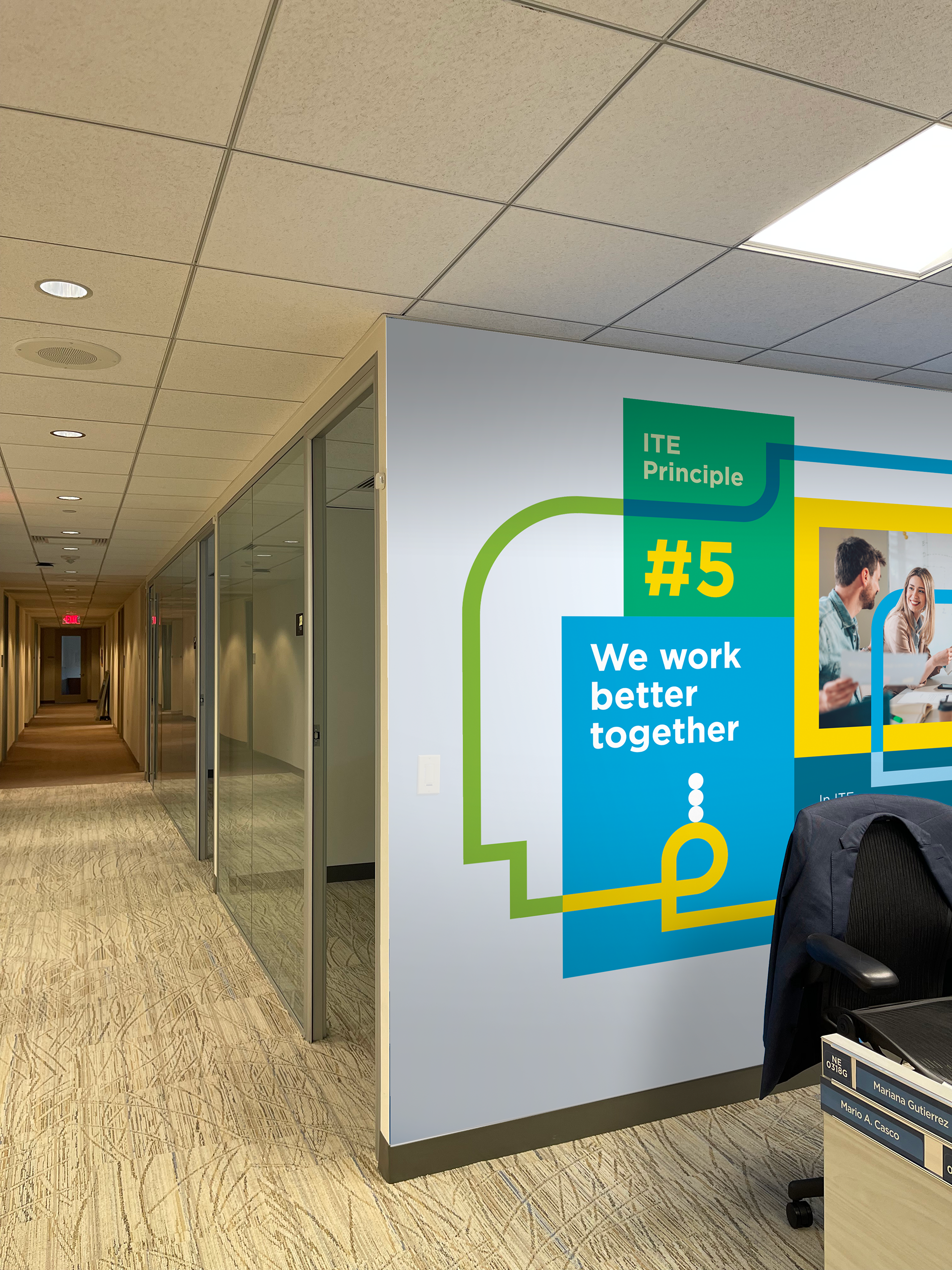
The core concept is built around movement and connection: Each department principle is represented by a white sphere placed at a different point along a path. The path itself is interconnected, symbolizing collaboration, progress, and shared direction, but each bringing unique qualities, hence the different colors. The system visually reinforces that teams are part of a larger journey, not isolated units.
This allowed the identity to be highly conceptual while remaining flexible and easy to apply across materials.
🫶 Usage & Adoption
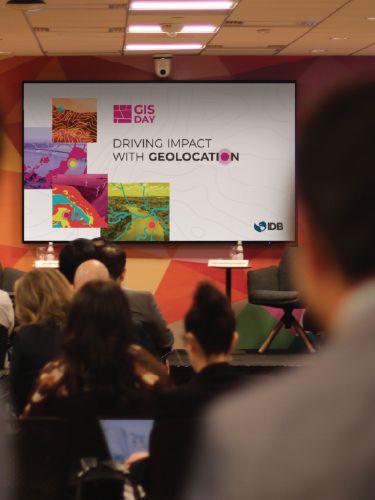
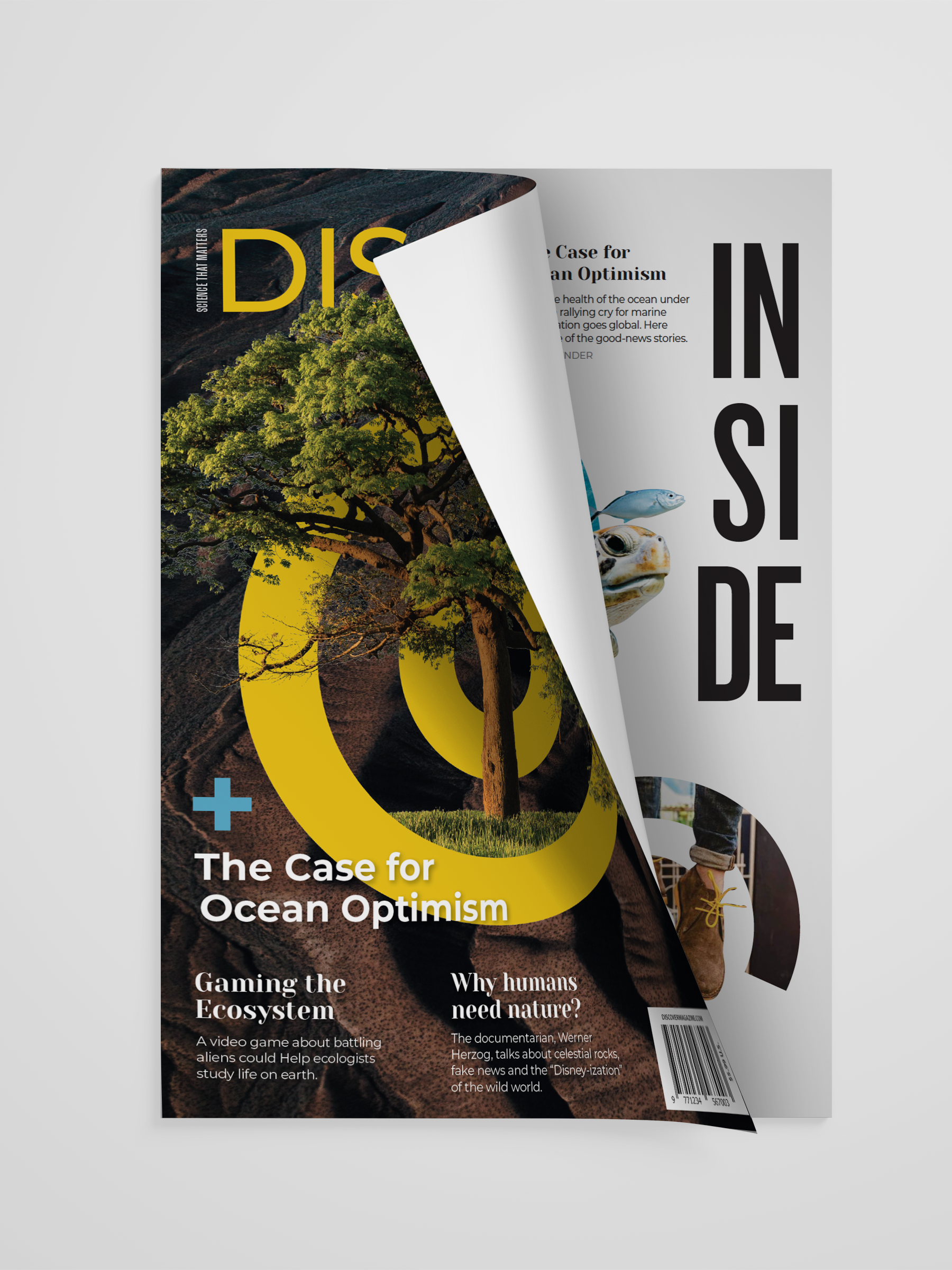
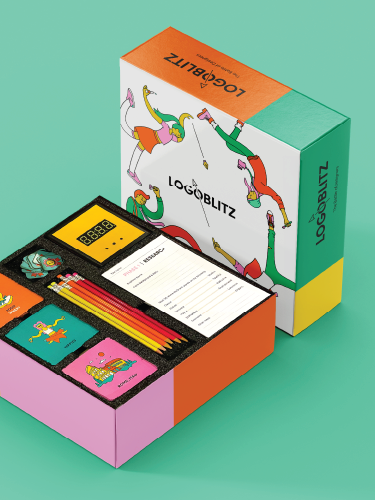
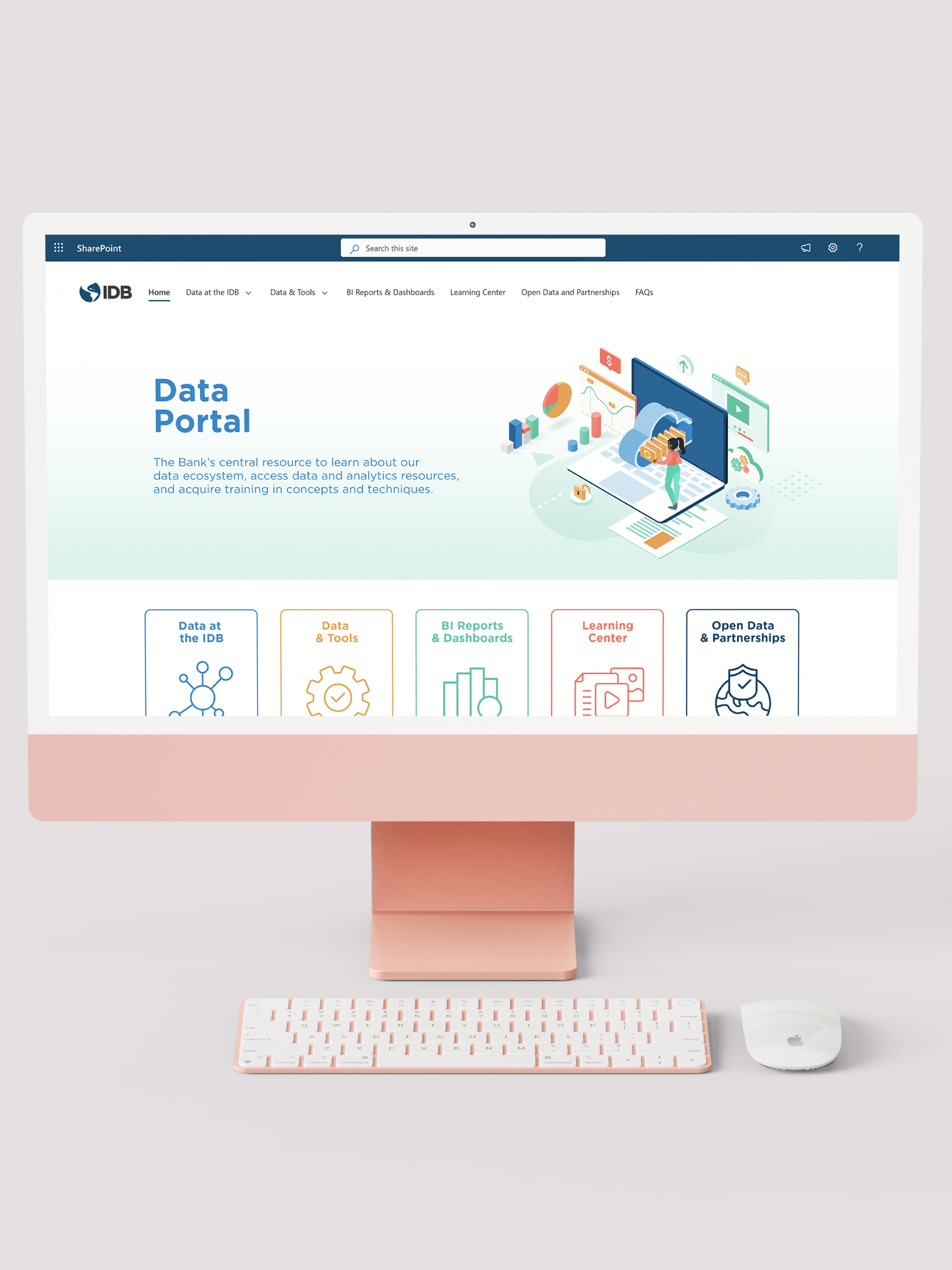
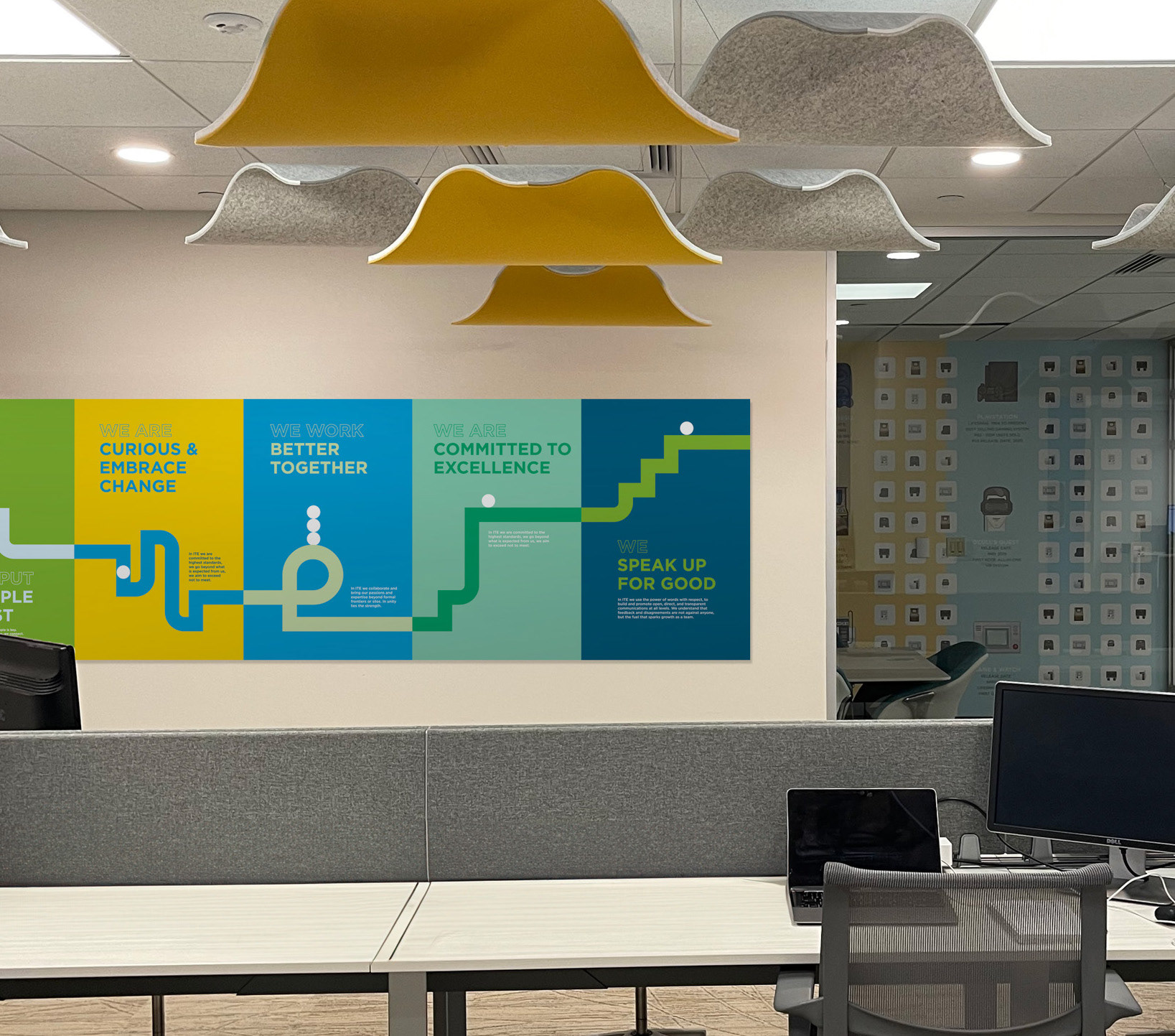
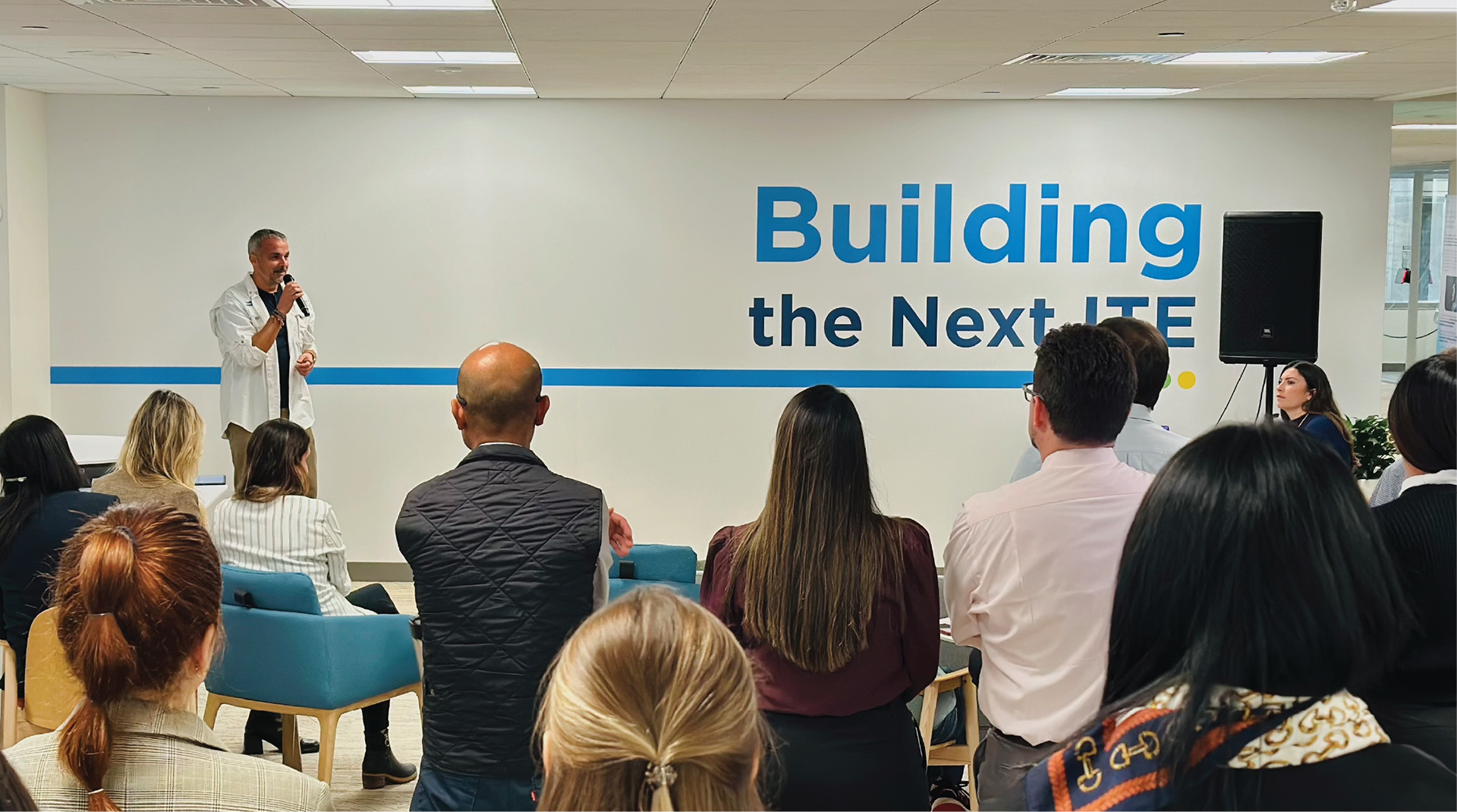
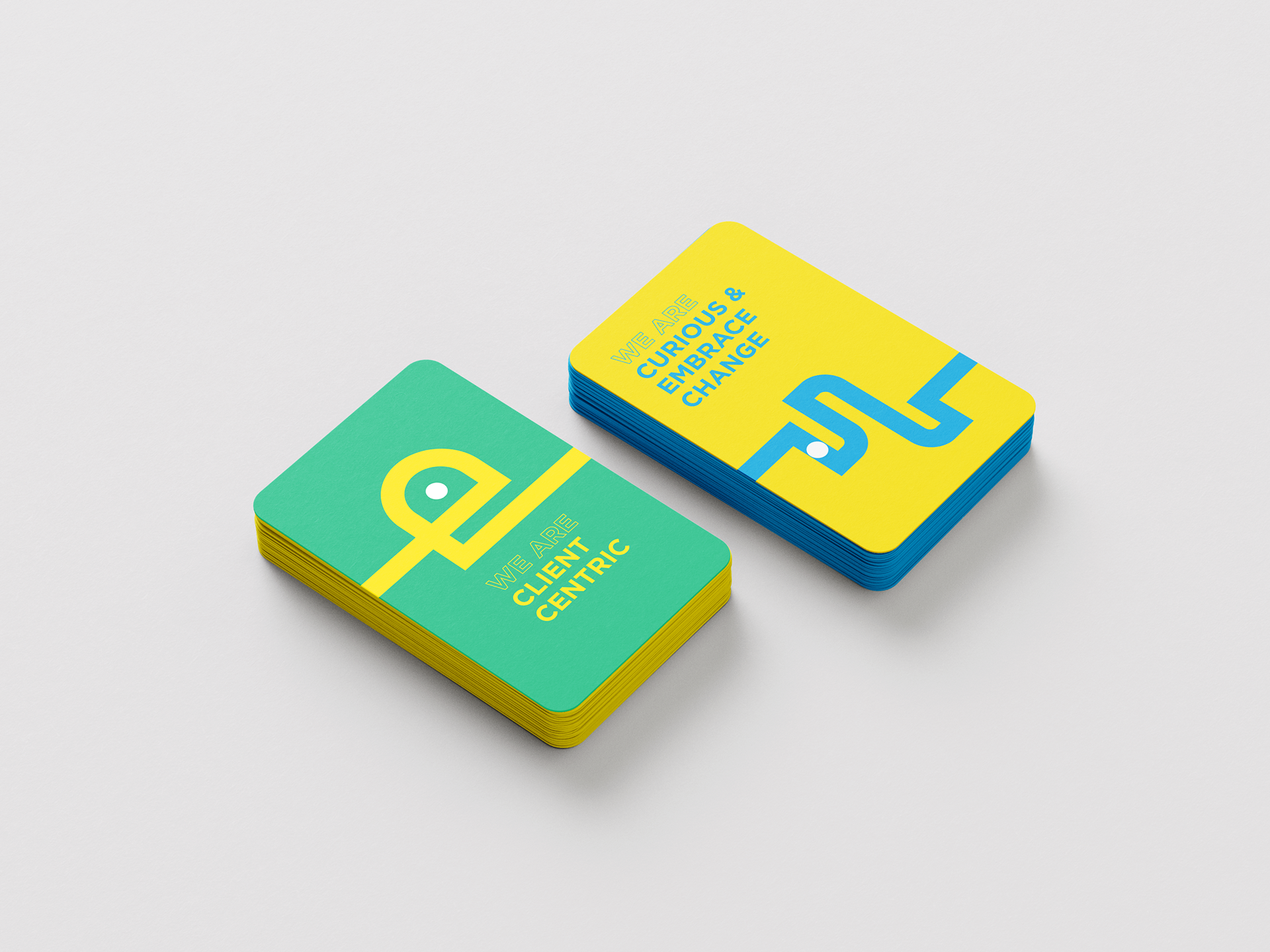
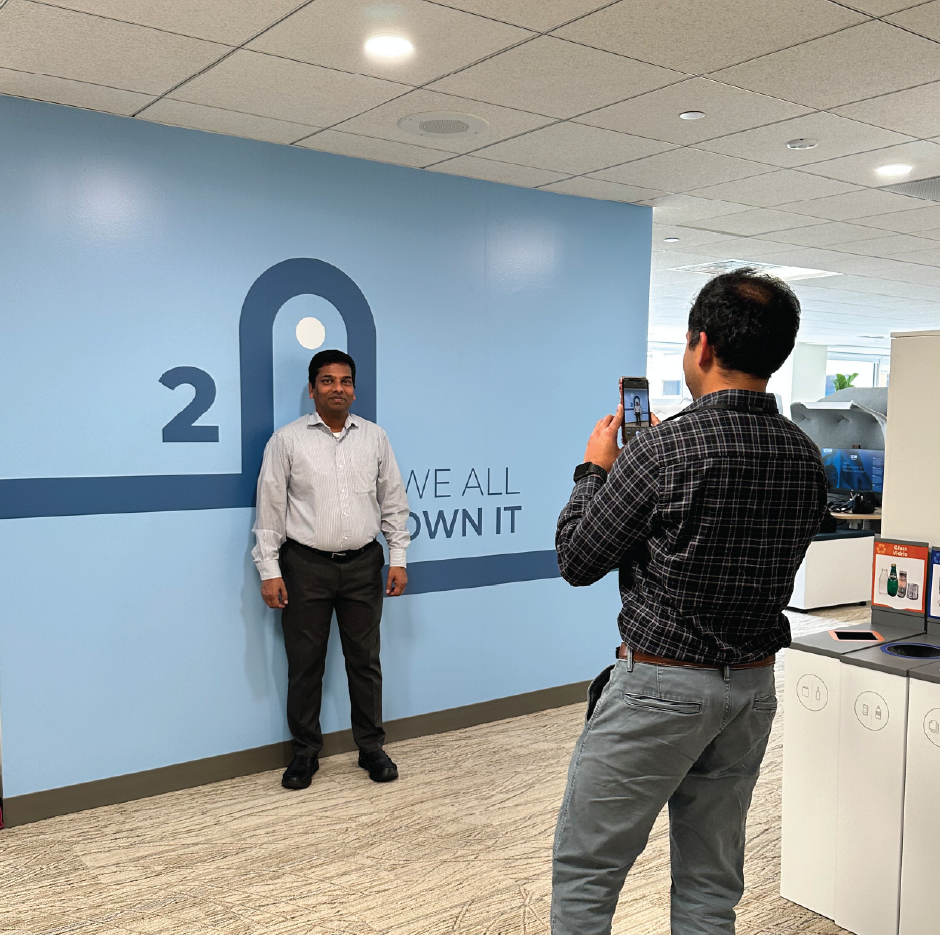
The system was rolled out across offices, internal communications, presentations, events, and the department website. Within a few months, teams began using the materials consistently and recognizing the identity as part of their daily work.
One unexpected success: the wallpapers became a favorite, acting as a subtle but constant reinforcement of the department’s shared values.
The system did not change conceptually over time—it expanded, proving it was strong enough to scale without redesign.
💭 Reflection
This project reinforced my interest in concept-driven systems and branding as a tool for cultural change. Designing an identity that people actually adopt—without forcing it—was a strong reminder that good internal branding can be just as impactful as external work.